


Welcome to September’s first quarter! This time of year is a great for all of you DIY-loving and self-proclaimed herbal witches out there because there is so much you can get your hands on.
But first, let me take you to an enchanted forest. Within the land of the German county Hessen - which admittedly sounds less enchanting and more like a curse - there is a castle right above an animal park by a forest known for its 1000 year-old oak trees. Some 400 centuries ago, the castle rose to fame across dukedoms for its high thorn hedges that supposedly inspired the Grimm fairytale of Sleeping Beauty, an association that was happily adopted by locals.
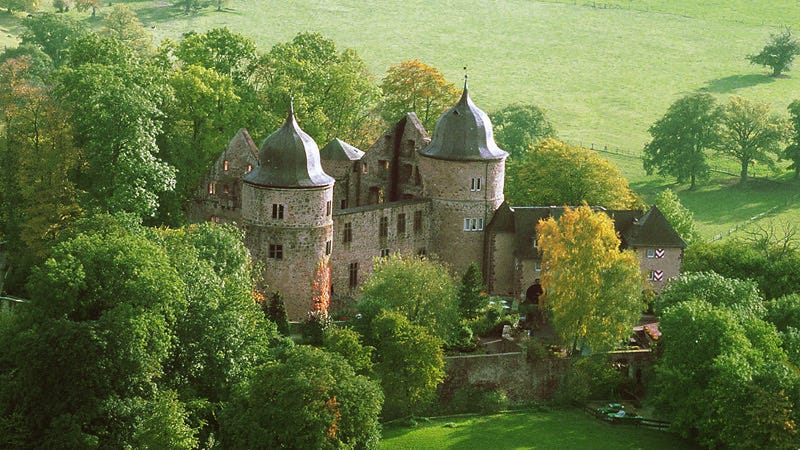
Although it is the rose that can be said to be as much (and a probably more intriguing) protagonist than Sleeping Beauty herself, there is some discussion around the specific rosaceae type that’s featured in the tale. In deep niche circles of German folklore, there is the belief that the hedges were in actuality made from another tree: the hawthorn.
Hawthorn makes a strange, contradictory wand, as full of paradoxes as the tree that gave it birth, whose leaves and blossoms heal, and yet whose cut branches smell of death.
J.K. Rowling: Wand Woods, originally published via Pottermore on Aug 10th 2015
It is known in the common sense: a soup or broth made precisely from hawthorn berries. Hawthorn, sour in nature, enters the spleen and stomach channels, and is most effective at invigorating the blood and dispersing stagnation, stimulating the appetite and aiding digestion. For a weak, human expectant mother, consuming it would strengthen the spleen, boost her energy, calm the fetus, and nourish her body. Yet if she is a snake demon in disguise... the cold, demonic yin energy in her body will certainly clash with this blood-activating property! Then, you shall know the truth.
Free Retelling of “The Legend of the White Snake” (白蛇传), based on local folklore
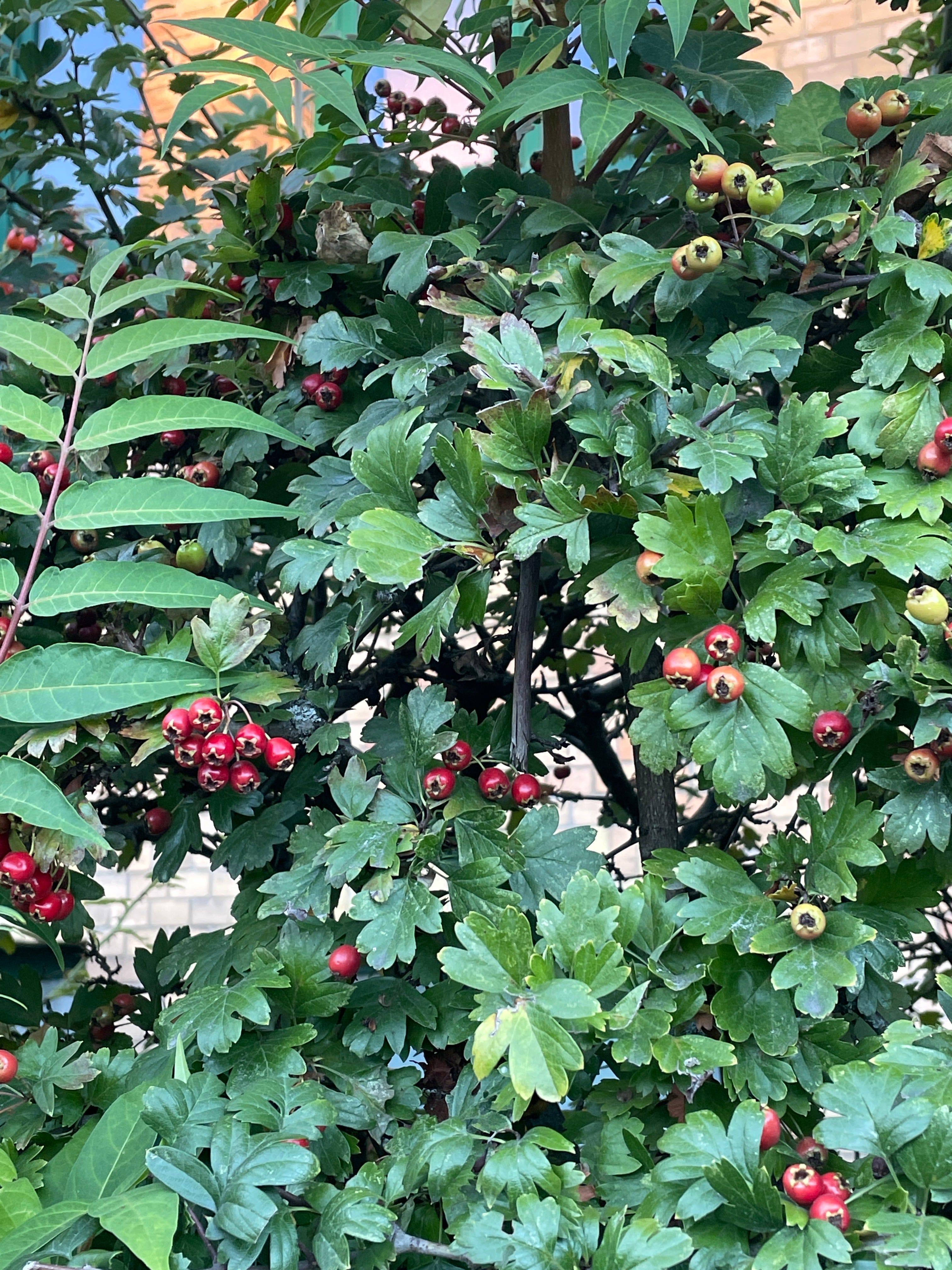
In fact, the hawthorn is still the heart of many hedges across Europe. If you live in its Northern parts, pay attention to the roadside yards next time you walk around. You’ll probably find it easier to spot during its blooming season in May. This time of year, the tree bears small, red berries that have much to offer in terms of story and medicine. In European and British folklore especially, the hawthorn tree was celebrated during its blooming season, linking it closely with Mayday festivities. It was the Mayday tree in many ways, and literally referred to as May-tree. Much has been said about that, however, so we’ll turn eastwards to explore other aspects of the tree: its wood, berry, and thorn between Germany, Britain, and China.
Beyond the rituals of fertility that the blooming hawthorn is the subject of come May, the tree, like the yew, has an uncanny quality that connects it to death. The “smell of death”-attribute mentioned in the quote above is not purely rooted in folkloric superstition, which strongly advises against bringing hawthorn branches into the house. J.K. Rowling drew from a pretty dark part of the hawthorn’s reception that’s somehow persisted in associating the tree with bad luck. As it turns out, the cut branches release a smell that, broken down into its chemical components, is similar to those that make up the smell of decaying animal tissue. This apparently reminded people of the stench in the streets during one of the most notorious and fatal pandemics of human history: Black Death. With this kind of legacy, it’s understandable why the hawthorn was handled with special care or avoided altogether in other contexts.
Apply this sensory detail to the story of Sleeping Beauty and you have shifted the tone, and perhaps meaning, of the tale. Behind monumental walls of hawthorn emanating a smell of decay over a resting kingdom, the most natural instinct would probably not be walking right into the place and find someone to kiss. Unless you are a special kind of prince with a special kind of task, the hawthorn is a powerful protector.
There we have it: the roots of a tree that supposedly makes a strange and contradicting wand: Hawthorn is where love and death meet, where protection is cast through blood drawn from thorns, or a stake from its wood piercing demonic flesh. The organ that symbolises this paradox is, of course, the heart. And it does respond to the hawthorn in a remarkable way.
European folk medicine emphasises the importance of hawthorn tinctures and teas in treating all diseases of the heart. Modern research attributes the hawthorn plant with antioxidant, hypotensive (vasorelaxing), and anti-atherosclerotic properties that could be possibly beneficial in relieving the coronary blood flow of patients suffering from chronic heart failure. Interestingly, these actions would, in Chinese medicine, be assigned to the pericardium specifically rather than the heart in general. Known as the “heart’s envoy”, the pericardium is the heart’s protector. The poetry here brings symbolism and anatomy together.
Structured as a double-walled sac surrounding the heart, the pericardium prevents the heart from rubbing against other organs and keeps things smooth by providing serous pericardial fluid between its two layers. It also roots the major coronary vessels that extend from the heart necessary for its blood circulation. For these reasons, you could say that the hawthorn’s healing properties are directed more towards the envoy of our most treasured organ. Hence, hawthorn protects the heart by literally paving the way for blood - if our coronary vessels are nice and relaxed, our heart can work properly, and we are a step closer to being alive and happy.
Touching upon the hawthorn’s blood-circulatory effects via the pericardium also takes us to its cousin in the East, where traditionally, the hawthorn is less known as heart medicine and more like a lore-heavy digestive fruit.
What smells like death to some smells like sweets to others. A specific type of the hawthorn, the Crataegus Pinnatifida, can be found in a lot of Chinese desserts and candies. This type of hawthorn grows larger fruits. Not unlike an apple in terms of texture but smaller in size, these hawthorn berries are a well-known staple of traditional Chinese medicine.
The Chinese name of the fruit is Shan Zha: Mountain Hawthorn. Its wild ancestor, native to Northern spheres from East Russia to China and Japan, thrives in mountain areas and hillsides.
The ways you can consume or process the fruit are many. Fresh or pressed to different types of candy. Dried and brewed as tea. Said to impact the liver, stomach and spleen meridians, Shan Zha aids digestion in cases of food stagnation, when there is abdominal distention and fullness after food intake, especially in relation to greasy foods. In traditional channel theory, the liver and the pericardium are paired together for their collaborative efforts to store, purify, and distribute blood. In this way, though the hawthorn’s not directly associated with heart disease, folk medicines of East and West can reach a common understanding through the physiology of blood circulation.
Traditional Chinese medicine assigns a slightly warming thermic quality to hawthorn, which makes it a great candidate to adjust to the shifting temperatures in autumn when it is harvested.
It is highly contra-indicated during pregnancy, however, as large amounts can be harmful or even lethal to the fetus.
In the famous Chinese Legend of the White Snake, it is the hawthorn berry that propels the story into tragedy, much like the apple triggers sin in the bible. Here, it is a monk that lies about the harmful effects of hawthorn berries on pregnancy and gives them to a clueless doctor who is expecting a child with his wife. The “wife”, who in actuality is the powerful spirit of a benevolent white snake, takes the “medicine” and reveals her true form, which leads to a crisis between the lovers, ultimately breaking them.
The tale is quite specific about how hawthorn berries work in expelling a demonic force. It is “blood-invigorating”. Translated to less mystic terms, this relates to the berry’s warming or blood-circulatory properties. Within the tale, the logic is that a demon, seen as cold or yin-natured, won’t withstand the yang-natured action of warming the body and moving blood, especially if she is busy trying to maintain a human form, as is the case here.
But mystic medicine talk aside, what happens if for a moment, the Legend of the White Snake were to interact with the tale of Sleeping Beauty through the shared symbolism of a plant from the rose family? In one story, true love finds its way through thorny hedges as everything else is put to temporary rest. In the other, the berry of the same tree breaks a couple by revealing truth through transformation.
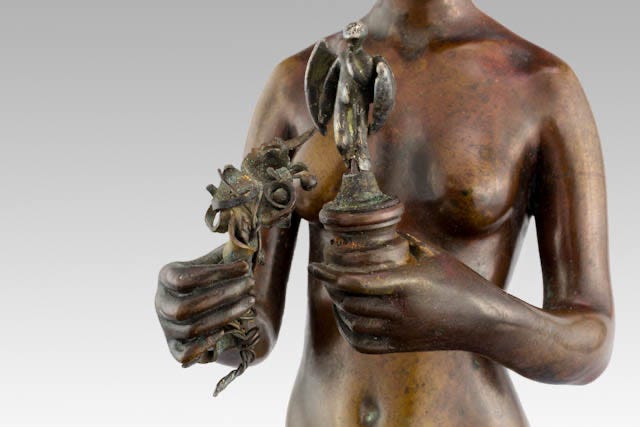
Another layer is unraveled through this dialogue. Although the berry doesn’t seem as relevant in European folklore, the wood of hawthorn has an ancient place in rituals and offerings to the Greek god of marriage, Hymen, whose altar was supposed to be decked with its branches. This ancient custom is referenced in the detail of a Victorian sculpture holding a hawthorn branch in one hand and a mini-Anteros in the other (pictured above). The hope for a marriage rooted in reciprocal love is highlighted through this combination.
While the wood of a tree and the fruit of a tree don’t have to share symbolism, it’s telling that in the case of the hawthorn, they do when you spin the globe: the red of hawthorn berries is read as a sign of auspiciousness in love, echoing the heart-theme through colour and symbols of fertility in the fruit.
However, you don’t have to be in search of either love or fertility in order to enjoy the many tastes of hawthorn. A compote or tea is easy as pie (hawthorn pie might be an idea actually), and you can leave the staking of vampires with hawthorn wood to Buffy or another demon slayer of your trust.
In case you plan to harvest hawthorn berries yourself, make sure to take them only from trees you know. I typically monitor trees for 1-2 years before I harvest anything, first because you want to make sure that they are free from toxins due to pollution and second because it‘s rude to take something from someone you’ve barely met!
If you’re impatient, look for dried Shan Zha in well-curated Asian supermarkets or on the internet. Boil 3-4 slices per serving for 10-15 minutes after soaking and add rock sugar if you’re feeling sweet.
Let me know if you’ve spotted hawthorn either wild or hanging out in a neighbour’s front yard, or if you’ve tried the tea, marmalade, or other hawthorn treats.
Notes & Further Reading
As I’m posting from the mobile version in Mainland China, I’m unable to provide footnotes for this article. Please forgive me for just cold-copying-and-pasting the links I consulted, in no particular order, in the following. Check back later for actual footnotes and references!
https://treesforlife.org.uk/into-the-forest/trees-plants-animals/trees/hawthorn/
https://www.kenhub.com/en/library/anatomy/the-pericardium
https://hann.muenden-erlebnisregion.de/en/poi/sleeping-beauty-castle-sababurg
https://harrypotter.fandom.com/wiki/Hawthorn
https://www.americandragon.com/Individualherbsupdate/ShanZha.html
Fascinating, Lucia!
Hawthorn syrup I reckon