

Winds of the World
Tracing my ancestral history on the tracks of the South Manchuria Railway.

A New Moon Letter on how we lost land, remembered wind, and returned to paper:
To the Wind that I’d almost forgotten,
Of my four grandparents’ funeral, I only attended that of Yeye, my paternal grandfather, and I’m not even exactly sure why I made his, and none of the others.
Yeye is also the only grandparent who’s been visiting me consistently in my dreams, and I’m not exactly sure why it’s him, and none of the others.
Perhaps because I bid him farewell in that sense? Or because our life paths align in odd ways? Because we both enjoyed the same parts of Chinese culture, and felt threatened by the current political climate? I’m not sure. But of all my grandparents, I do think of my Yeye most often. And maybe that’s reason enough.
On the day we put Yeye’s urn into the ground, we went to the large ovens on the hill of the graveyard. We burned grainy yellow paper and printed paper money in the oven that was assigned to those born in the year of the dragon. We talked to Yeye and wished him well. On our way downhill, there was a strong gust of wind that interrupted the clear summer’s day. The clouds broke for a moment but I don’t think there was rain.
“Yeye seems to have received our offerings”, someone - I forgot who - said then. I was only a kid, but I remember the recognition I felt at these words. I had no concept of spirituality or judgement thereof. It just made sense to me, like someone had spoken truth.
All of this had been slumbering somewhere in my memory and only recently returned to me when I visited Estonia as part of a study group with Kogi (Kaguba) Elders. On our last day, we went inside the forest until we reached a small clearing with a large rock next to a group of smaller ones close by. Its back was more than two metres high, covered in moss and dandelion. In front of this mighty rock, the Elders conducted a ritual — a musician played on a traditional kind of flute, the procession was nearing its end, when there you were again. Wind. You carried a low but persistent note, almost like you were responding to the flute by playing along, a reverberating sound, deep and eerie.
I listened until it faded, but it lasted for longer than I expected. In that moment, a wave of emotion washed over me. From I don’t know where, the wind from Yeye’s funeral bubbled up in my consciousness.
As I treaded back through the forest alone, I listened for more. I was beginning to second guess myself.
Had I imagined it? Had it been a windy day anyways?
But there was nothing. It had been a wind still day. And I was sure, I hadn’t heard you sing like that in a long, long time.
Where the Phoenixes Dwell
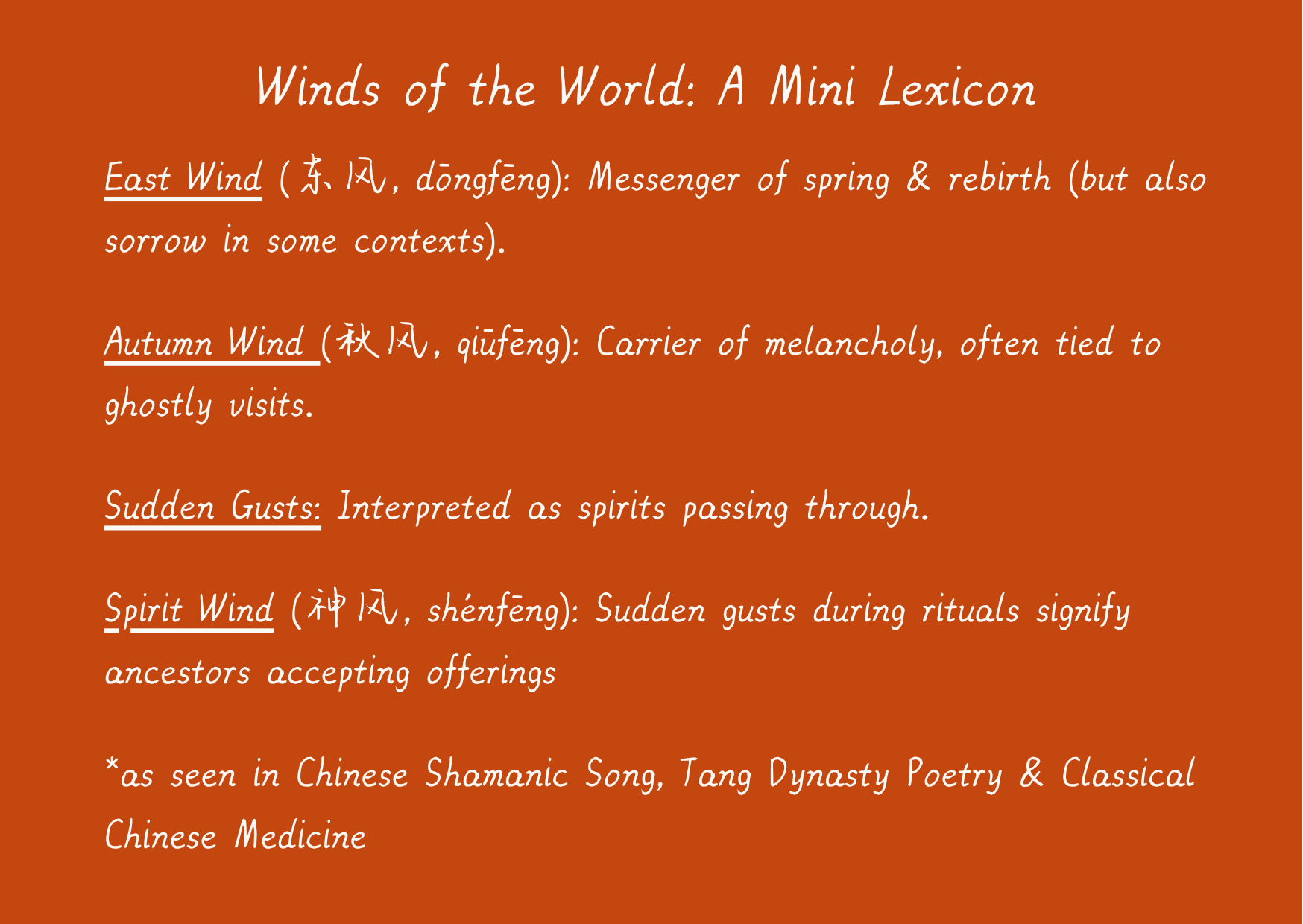
What appears nowadays as a metaphor was then most probably believed to be a reality: the wind brings life from heaven on Earth; it penetrates the earth through its opening, at the image of the caverns in the mountains (feng xue 風穴) which are also where the phoenixes dwell at sunset. Blowing in the spring, it triggers the process of transformation leading to germination, growing of the vegetation, and maturing of grains.
(Rochat De La Vallée, emphasis mine)1
In Chinese medicine and cosmological thought, wind and wood are kindred. Both relate to the liver in a systematic sense. In a healthy state, wind is a dynamic that brings things into motion and aids the natural process of circulation. Wind carries seeds - thoughts - as well as other invisible forces such as sound, and sickness. I’ve written about how soft wind can be a helpful mental image to clear the heart and mind.
But wind can become pathological, both in taking up the form of a storm or as a carrier of pathogens. Earlier civilisations didn’t call them viruses, but a vulnerable person can be invaded by wind pathogens that are spread through the air.
In addition to what would then be classified as “external wind” (pathogens entering from the outside), there can be “internal wind”, mostly from liver fire or Yang rising, causing migraines, hypertension, insomnia, or anxiety. If a person isn’t rooted from a Chinese medicine point of view, this can show in general forms of deficiency (for example, blood deficiency manifesting as anemia).
The natural dynamic quality of wind can become sudden and erratic. We can be taken by shooting pain - tremors or strokes for instance, are seen as conditions caused by abnormal wind. A wide variety of neurological disorders might also fall under this category. Raging wind can transform into a lasting storm, causing us to feel disoriented and unstable.
风熄则神安 (Fēng xī zé shén ān) — When wind is extinguished, the Spirit calms.
Classical Chinese Medicine Principle.
On a spiritual level, wind drives the Hun, the ethereal soul, within the concept of Five Spirits. The liver roots the Hun, but when wind is ceaseless and the body is weak, the Hun can escape. Dreams are a good way of explaining this: there is something awake and travelling within us while we are not when we dream. Intense dreams that leave us restless are, in Chinese terms, an expression of the ethereal soul that wanders a bit too much. Those affected awake tired, feeling like they’ve been up all night.
But the Hun can also escape us in waking life. An increased sensibility to our environment, to the extent that it might harm us, can indicate that the Hun is not rooted in the blood. I once had a patient who accidentally walked by a public fight. She’d been so affected by this that she felt off for days. If the blood is in a good condition, this is less prone to happen (the liver purifies blood, which grounds the Hun).
Have you ever felt like a simple, unforeseen situation ruined your day, or that you were unable to shake off the negativity of a stranger (spoiler alert: almost daily in Berlin City)? In the concept of Five Spirits, this would likely relate to a destabilised Hun/liver that becomes susceptible to wind.
West Wind, Going East - East Wind, Going West
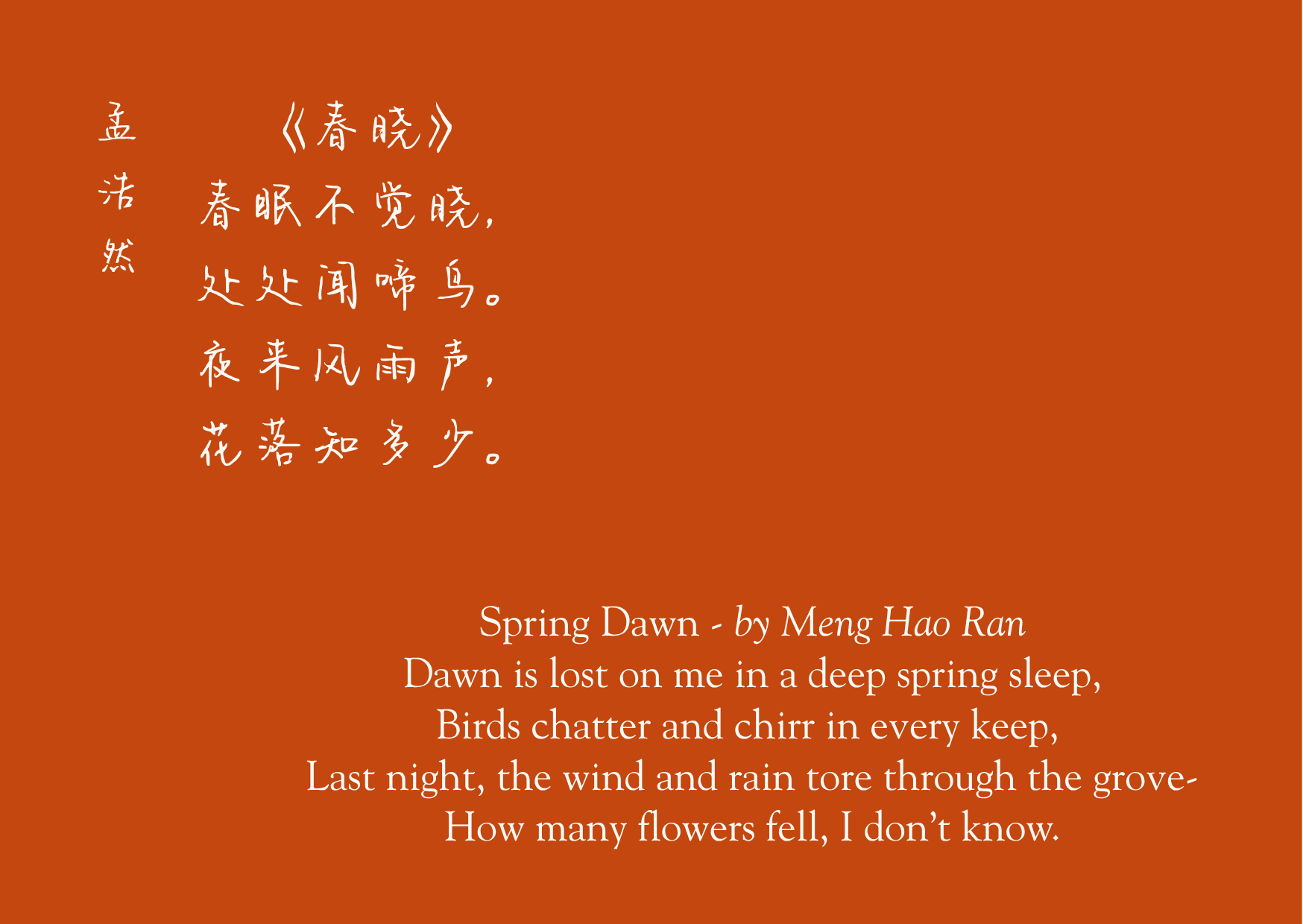
Although I’ve never even spent a longer time living there, the Northeast parts of China are a defined part within my inner landscape. This means: after years of questioning how I should answer the question “where I’m from”, I have to state Dongbei as well as Berlin. Without this addition, it just doesn’t feel like I’m being honest — like I’m cheating my origin a bit.
Dongbei is a province with big cities now, accessible from everywhere in the country via plane and high speed trains. But in the early 2000s, we’d take the overnight train from Tianjin - it would rattle a day and a night over rusty tracks, passing towns I don’t remember.
Back in the day, it must have felt like another realm to those from the South. The vastness of land, the close proximity to the sky where clouds, strangely, do seem that much closer to grasp. The coldness, dusty steppes, and rough winters.
The history reflects all this in a strange sense.
Koreans continuously fled to Dongbei from the Goryeo Dynasty onwards, and were allowed to take land by the 19th century, joining other landlords that had once come to cultivate the North. Amongst them, my earliest recorded ancestors that left the Shandong area before the rise of the Qing Dynasty.
The Japanese occupied and colonised parts of Northeast China several times. There are Shinto shrines, schools, and colonial buildings, and heavy Japanese influences especially in the city of Dalian (but also Changchun). My granddad even had a Japanese teacher, who took on the role of a surrogate father for him after his own had sacrificed everything, including himself, to his opium addiction.
Japan had tried to re-install the last Emperor under a new Empire (or so-called “puppet state”), Manchukuo, with Changchun as their chosen capital, where my father’s family was sent later to live as farmers during the Cultural Revolution.
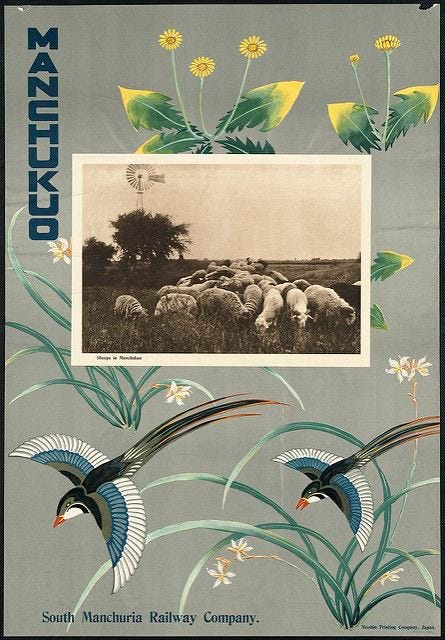
Until 1945, the South Manchuria Railway2 operated between various parts of the North, before being seized by Soviet troops in the Soviet-Japanese War. As a result, these railways were severed and repurposed, which meant that regular railway services were interrupted. Yeye, who had lost his Japanese mentor to the war, was thus unable to locate his family that he had promised to take care of. Yeye spoke of this often (not to me, but to my father), when he was alive. He never showed his sadness or regret in front of me. He was full of stories and smiles.
For the most part, I’ve been in Changchun over summers of my childhood. Of the lands my family once owned, and our family grave that used to be roamed by tigers — nothing remains. Thanks to the Cultural Revolution, and the brutal construction rage to grow housing markets when China’s economy needed to rise, we don’t get the privilege of remaining in a place that weaves our consciousness into the memory of the land.
“Heaven is not a place”, my Hawaiian teacher Harry said once. “It’s a frequency.”
And this is what it feels like, perhaps with nothing else I can hold onto but the frequency of my memories.
My grandfather loved to tell stories, and he was a skilled herbalist. In my grandparents’ bedroom in their latest flat, there’s still a desk, although they themselves no longer are amongst the living.
I remember the breeze that softly blew through the half-open window, covered by a mosquito net, as I set down a thick brush made from goat or horse hair, under my Yeye’s direction.
For days in summer, stories and calligraphy would take their turns like sun and moon. There’d be dumplings and water melon in between. And on the heavenliest of heavenly days, there’d be peaches.
Yeye had his own special paper, something between parchment and rice paper, I was too young to be interested in the specifics, but he cut the sheets himself, and when he pulled them out to spread them on the desk, it felt like the sky god pulled a wagon across the sky, and land was given to me. He’d show me the way of the ink and the brush, he’d direct me while I practised strokes of characters from a language I never got to master, but still deeply love. I peopled my paper with imperfect, joyous dots and lines, passionate about the curves of black ink that were born from my hand. Yeye would prepare each session for me with care, evening out the paper with ink stones, placing the brushes, pouring and mixing the ink. The only thing I had to do was show up.
Twenty years had passed when I picked up the brush again. I spread out the paper on my desk, set a stone on its edge, filled a dish with Japanese ink, took a brush into my hand. I allowed myself land, to people my paper again, discovering and battling how much I wanted things to be perfect. But Yeye was there all along. Despite the regret over stopping, I had not forgotten how. Yeye had made sure that no matter where I went, I would know how to lean into the brush.
This is my origin, the frequency of my heaven, a fragment, only a part, the peach that makes me immortal. A memory that returned with the wind.
Peaches of Immortality
What’s a memory you return to, one you feel nourished by in an inexplicable way? The peach that makes you immortal? The frequency of your heaven?
And: I had some calls with my father inquiring after my granddad when I returned from Estonia. Learning about his favourite poet and poems felt really, really good. Amongst the many things lost, I felt at ease learning about these small but meaningful details of his life.
I urge you to get to know your grandparents’ favourite poems and poets, if you don’t already! Please feel free to share them here — would love to see them here!
Notes & Further Reading
Rochat De La Vallée, Elisabeth. Charles Strong Trust Lecture 2012 Shen (Spirit, Soul) in Chinese Religion and Medicine. 2012, www.elisabeth-rochat.com/docs/31_shen.pdf. Accessed 26 May 2025.
A general overview on the history of Northeast China:
Goddard, W. Alex. “History of Northeast China (Dongbei): Manchuria, Literature and Culture - Timeline.” History of Northeast China (Dongbei): Manchuria, Literature and Culture, 20 Aug. 2024, www.manchurialiteratureculture.uoguelph.ca/timeline/.
Overview of the South Manchurian Railway (SMR) history: The Editors of Encyclopedia Britannica. “South Manchurian Railway | Railway, China.” Encyclopædia Britannica, 7 Feb. 2011, www.britannica.com/topic/South-Manchurian-Railway.
I loved reading this! Such a beautiful tribute to your grandfather. I've been curious in my studies of the I Ching about the relationship between wind and wood. Some images will use wind and others wood. I would like to read more about the connection between the two.
One of my most cherished memories involves my grandmother, who thankfully is still alive. It was a spring day, and the windows were open with a breeze coming through them. My mother had picked carnations, and I remember the smell so vividly. I was drinking peach tea and eating a muffin my grandmother had made. I was diligently working on my homework, which was for biology. I had to name the parts of the heart and the circulatory system. I remember writing it and my grandmother saying in the background, "She just sits down and gets right to work, how hard working!" It wasn't the praise I remembered so much as all the sensory moments and the connection I felt to my mother and my mother's mother. It was a moment that felt very ordinary, but now I see it as one of my happiest memories in the funny way that memory works.
My analyst says that one of the best ways to connect to the archetype of the parents (the Great Mother and the Great Father) is through our grandparents and recent ancestors. This was a great reminder for me to meditate on this more!
Stunning work, such an ode to your Yeye and Dongbei. I love how you twine together traditional medicine and personal essay and history and poetry. Really wonderful